install
Wolf cooktop or rangetop: which one fits your kitchen
Cooktop or rangetop in a Wolf kitchen: how each one installs, the burner outputs, fuel choices, griddle and charbroiler options, and what each means for service later.
Note
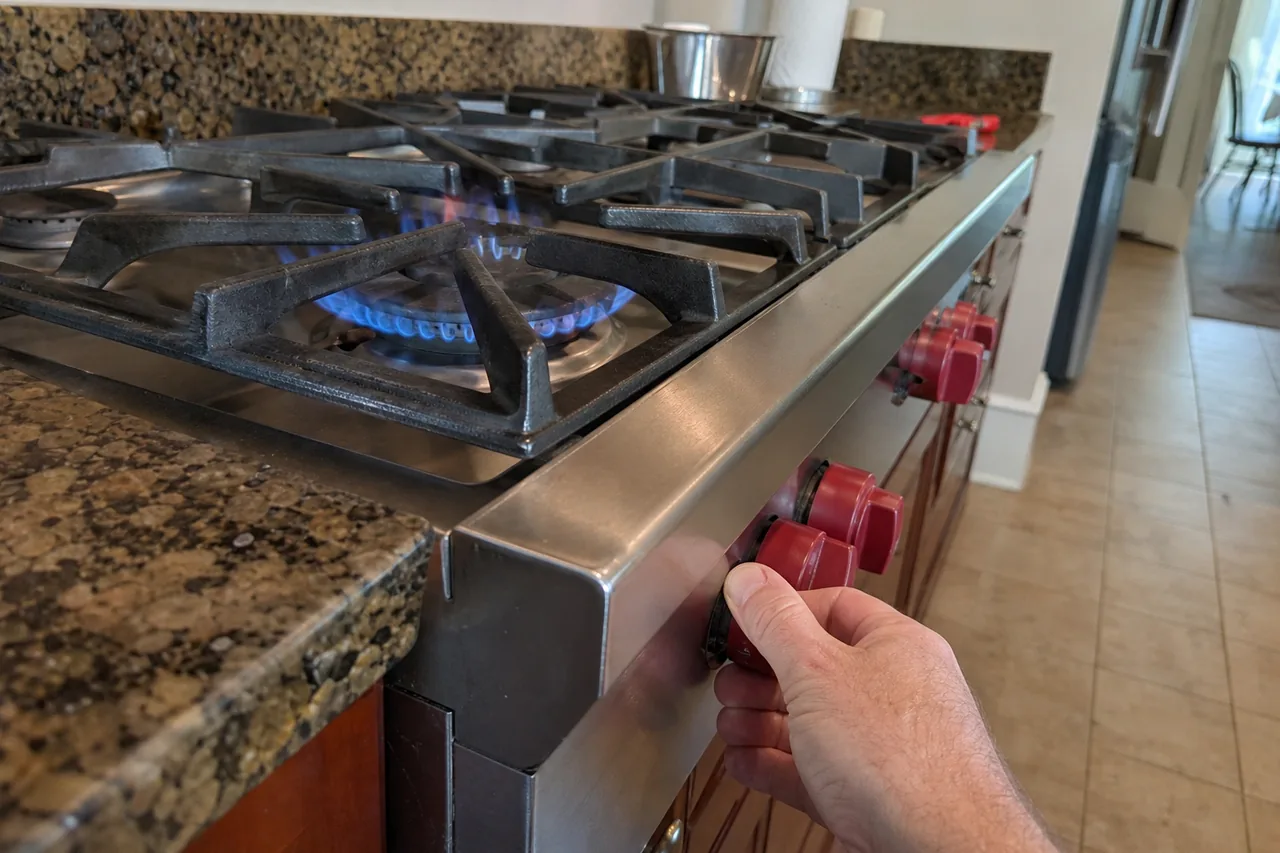
The difference between a Wolf cooktop and a Wolf rangetop is where the controls sit and how the unit is built into the counter. A cooktop drops into a cutout in the countertop and keeps its controls on the top surface, and it comes in gas, induction, electric and a multi-function version. A rangetop is a gas unit that slides into a cutout so its front panel lines up with the cabinet face, with knobs on that panel, burners up to 20,000 Btu and room for a griddle or charbroiler. Pick the cooktop for a slimmer install or for induction; pick the rangetop for a pro-style gas layout.
How each one fits the kitchen
A cooktop is the shallower of the two, which leaves more of the cabinet below for drawers or a wall oven nearby. Wolf names its cooktops by fuel: CG for gas, CI for induction, CE for electric and MM for the multi-function cooktop. A T, P or C in the model then marks Transitional, Professional or Contemporary styling, so the same cooking surface can look flush and minimal or heavier and more commercial.
A sealed burner rangetop carries the SRT prefix. Its burner box sits deeper and its control panel faces the room, so the cabinet under it has to be built around that panel. In return you get the look of a range without an oven underneath, which suits kitchens that already have wall ovens elsewhere.
Burner power side by side
On a sealed burner rangetop the front left burner is rated 20,000 Btu, other front burners 18,000 Btu, the rear left 9,200 Btu and the remaining rear burners 15,000 Btu. Those are the same ratings Wolf gives its dual fuel ranges, so a rangetop cooks like the top of a range.
Gas cooktops vary more by width and style. The 24-inch and 30-inch models, and the 36-inch transitional and professional versions, use an 18,000 Btu large burner, a 12,000 Btu medium burner and 9,200 Btu small burners. The 36-inch contemporary gas cooktop steps the large burner up to 20,000 Btu, and the 15-inch gas cooktop pairs a 12,000 Btu burner with a 9,200 Btu one.
Options and fuel
Rangetops take add-ons named in the model number: G for a griddle, DG for a double griddle, C for a charbroiler and F for a French top. The wok burner accepts woks from 14 inches (356 mm) to 18 inches (457 mm) across. Between the two, only the cooktop comes in induction, where Boost borrows power from the neighbouring element and drops back after about 15 minutes, and an element with no pan, or the wrong one, flashes for 30 seconds before shutting off.
Either gas unit can be built for natural gas or propane. The serial tag reads NG or NAT for natural gas and LP for propane, a model ending in -LP was built for propane, and a unit converted later carries a sticker beside its original tag.
Living with it and getting it serviced
Gas units of both types share the same common faults: a burner that clicks without lighting, a weak or uneven flame, a sticky valve. On a rangetop the igniter normally clicks for 3 to 5 seconds after the knob reaches Hi, so a longer wait is worth noting. Induction cooktops trade igniters for electronics, and their faults sit in the touch panel and control board.
Access differs too. A cooktop’s serial tag is on its underside, so you read it from the cabinet below. A rangetop’s tag is at the bottom of the control panel, at the far right, which makes the model easy to confirm before a visit.
Typical repair ranges here are $190–$540 for an igniter or spark module, $220–$710 for burner valve or orifice work, and $420–$1,070 for a control board or touch panel; the firm figure comes after the $80 diagnostic. Our rangetop and cooktop repair page covers both types across Ponte Vedra Beach.
After a call like this
4.6
out of 5, across 67 customer reviews. Each one below is a single visit, written by the person who paid for it.
The griddle plate ran hotter at the back than the front, and breakfast said so every morning. He mapped the element, found one leg down, swapped it and checked the plate end to end before leaving.
Emeric G.
The cooktop kept clicking away after the flames were already lit. He cleaned and dried the electrodes and replaced one that was cracked. Fixed, though I had to describe the fault twice to two people first.
Evander C.
The man who came clearly knew the equipment and the burner works. My problem is the paperwork: the written estimate reached me after the work was already finished, which is not how it was described.
Aurelio U.
The equipment
- Wolf rangetop and cooktop repairRangetop or cooktop
Where it turns up
- Ponte Vedra Beach32082
Notes alongside
Stuck on it
If the symptom in this note matches what your appliance is doing, the next step is a diagnostic on site rather than another part ordered on a guess.
The book
What does this repair cost?
$80
Flat $80 diagnostic covering the visit and the full diagnostic sequence, credited toward the repair once you approve the work. Everything under it is a band, not a quote. The figure that counts is written down after the diagnosis, and it covers the part, the labour to fit it, and the warranty — 90 days on labour, 365 days on parts, genuine OEM parts only.
| What was wrong | Typical finished repair |
|---|---|
| Diagnostic visit on its own | $80, credited |
| Igniter or spark module replacement | $190–$540 |
| Burner valve or orifice service | $220–$710 |
Those are the bands this page's faults land in; the rest of the book is on the rates page. The top of them is $710, and nothing at all — at that figure or well under it — is billed without a written estimate you have agreed to first.
Asked on the phone
What else do people ask?
- Why is the oven running cold or taking an age to preheat?
- Either the sensor is reading wrong or the element is not making the heat it claims. A probe on the rack at three settings separates the two inside a quarter of an hour. A sensor or thermostat replacement falls in $170–$530; a calibration trim on a sound oven is part of the visit.
- What goes wrong with a built-in grill on the dune line?
- Corrosion, in this order: electrodes first, then the valve stems, then the burner tubes. Salt gets in whether the cover is on or not. Electrode and spark work is $190–$540, valve and orifice work $220–$710. A grill lit regularly and brushed down outlasts one used twice a year.
- A burner will only run high, or only run low. What is that?
- A valve, an orifice or a mis-set simmer stop rather than anything electronic. Grease worked into the valve stem is the common one, and on a rangetop the answer is a strip and re-grease rather than a part at all. Valve and orifice work is $220–$710.
- What does a visit cost?
- Flat $80 diagnostic, credited toward the repair when you go ahead with it. You get a written estimate before any part is ordered or any labour is billed. There is no separate travel charge inside the 40-mile radius.